How to help a dog settle after moving house
Help your dog settle after moving by keeping familiar routines, preparing a quiet resting space and controlling access to open doors. Start during packing week, then let your dog's responses guide how much you introduce at the new home.
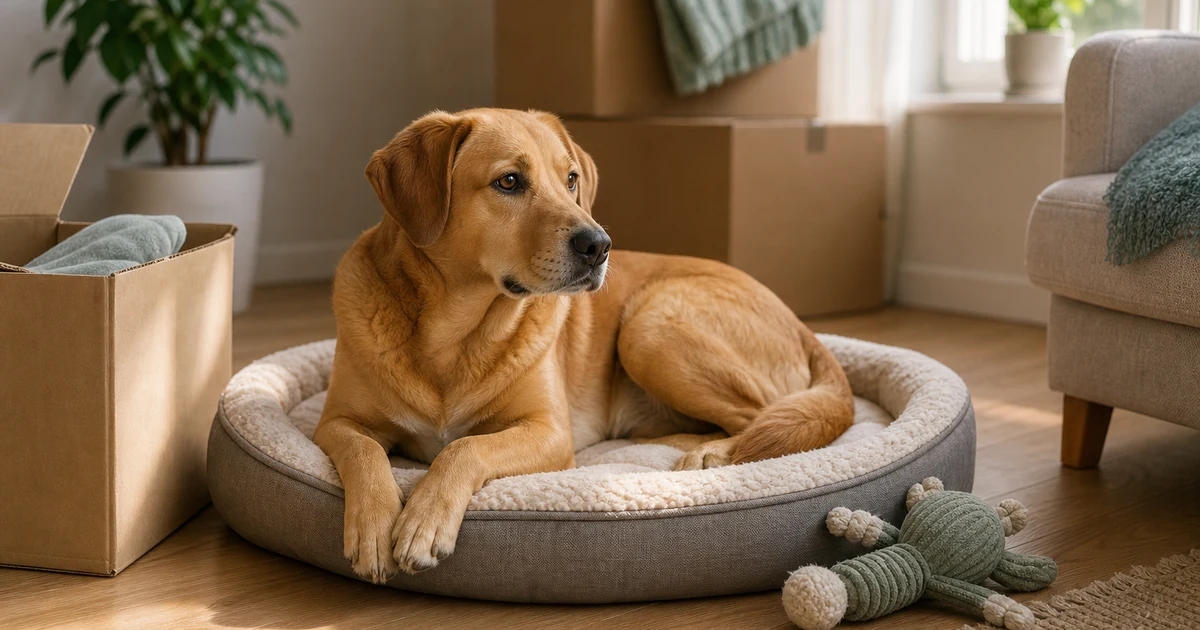
This plan is for a dog who already lives with you, not a newly adopted dog learning about an unfamiliar household. Use what you already know about their meals, sleep, walks and preferences as your starting point. The first-week schedule below organizes your tasks; it is not a deadline for your dog to feel settled.
Packing week: protect the familiar parts of the day
The ASPCA recommends introducing boxes early and keeping your dog's routine as normal as possible. Keep a familiar resting area available while other rooms change, and pack their bed and favorite belongings last.
- Write down your usual meal, walk, toilet-break and bedtime windows before packing disrupts them
- Choose a familiar person to look after your dog away from the busiest moving activity, if possible
- If your dog will stay with you, choose a secure room away from the loading route and assign one adult to their care
- Keep food, bowls, water, waste bags, a leash and familiar bedding in a bag that travels with you
- If car travel is difficult for your dog, speak with your veterinarian before moving day rather than improvising on departure
Check your dog's ID tag and update changed contact details directly with the microchip registry. Updating a vet record or a personal care profile is not the same task. Ask animal services at your destination which identification and licensing requirements apply, and save the contact details of a local veterinarian and emergency hospital.
Moving day: give one person responsibility for the dog
- Before loading starts, take your dog for their usual toilet break and move them to the agreed safe space with water and familiar bedding
- Tell everyone which room holds the dog and put a clear note on the door asking them not to open it
- Have the named adult handle toilet breaks and transfers; do not assume someone else has checked the door
- For car travel, use a secured, appropriately sized crate or a vehicle restraint harness in the back seat
- At stops, have the leash attached and held before your dog exits; offer water and toilet opportunities on longer drives
- At the new home, prepare the resting space before bringing your dog inside
Do not make moving day your dog's first experience of being shut in a crate. If they cannot rest comfortably behind a closed door, arrange for someone familiar to stay with them or care for them elsewhere. Never leave your dog alone in a parked vehicle.
Before exploring: repeat the escape checks
- Doors: confirm exterior doors close and latch, and agree who manages deliveries while your dog is out of their resting room
- Yard: walk the whole boundary, checking loose panels, gaps beneath fences and gates that do not latch
- Windows and balconies: prevent access to openings or edges that could allow an escape or fall
- Equipment: check the collar or harness fit, leash clip and readable ID tag before going outside
- Indoor hazards: check for leftover pest-control bait, accessible medicines, cleaning products, loose wires and toxic plants
- After workers leave: repeat the door and gate checks rather than relying on the morning inspection
Keep your dog on a leash for the first yard inspection together and whenever you are unsure the boundary is secure. Indoors, the ASPCA recommends beginning with one comfortable room and gradually opening access as your dog becomes comfortable. Let them return to that resting space rather than insisting on a complete house tour.
The first week: repeat first, expand gradually
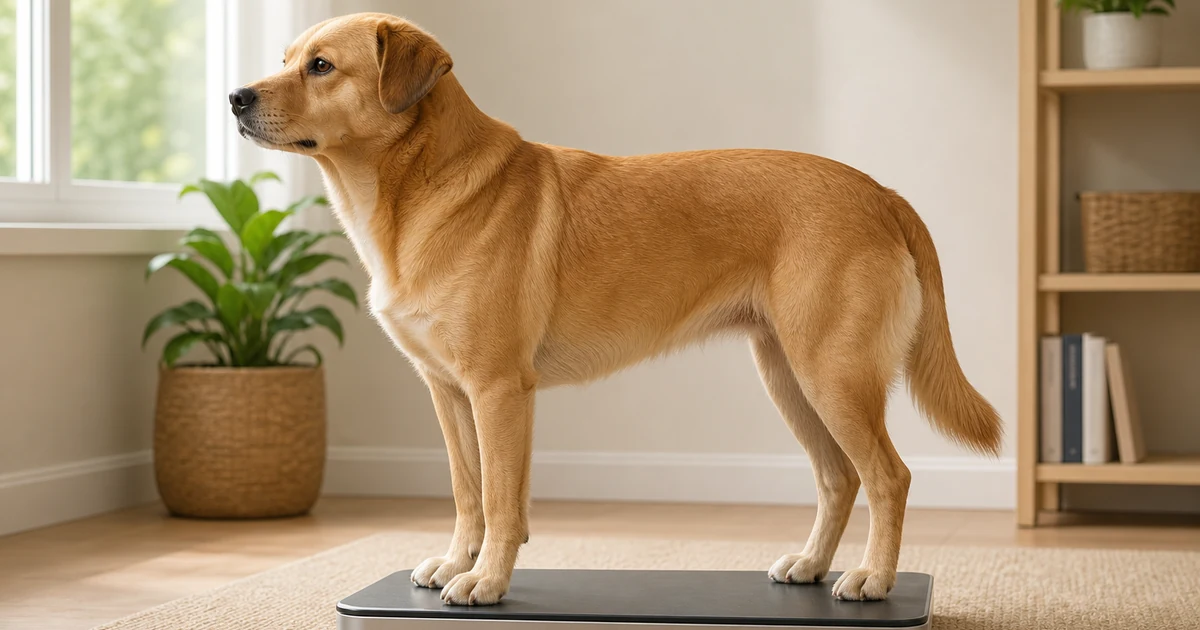
Dogs Trust advises keeping familiar walks, mealtimes and bedtimes while a dog adjusts. Different dogs settle at different rates, so use these stages as prompts to review the setup rather than dates when progress must happen.
- Arrival and first night: show your dog where water, bedding and the toilet exit are, then follow your usual evening sequence as closely as possible
- Early days: repeat a manageable leash-walking route and allow quiet rest between necessary household activity
- As your dog becomes comfortable: introduce another safe room without removing access to the familiar resting space
- Later in the week: review what is working before adding visitors, longer outings or more household bustle
- If an introduction is difficult: return to the simpler setup instead of adding another new experience
For example, if passing traffic repeatedly interrupts rest beside the front window, try placing the bed in a quieter part of the room. Change one part of the setup at a time so your notes can show whether it helped.
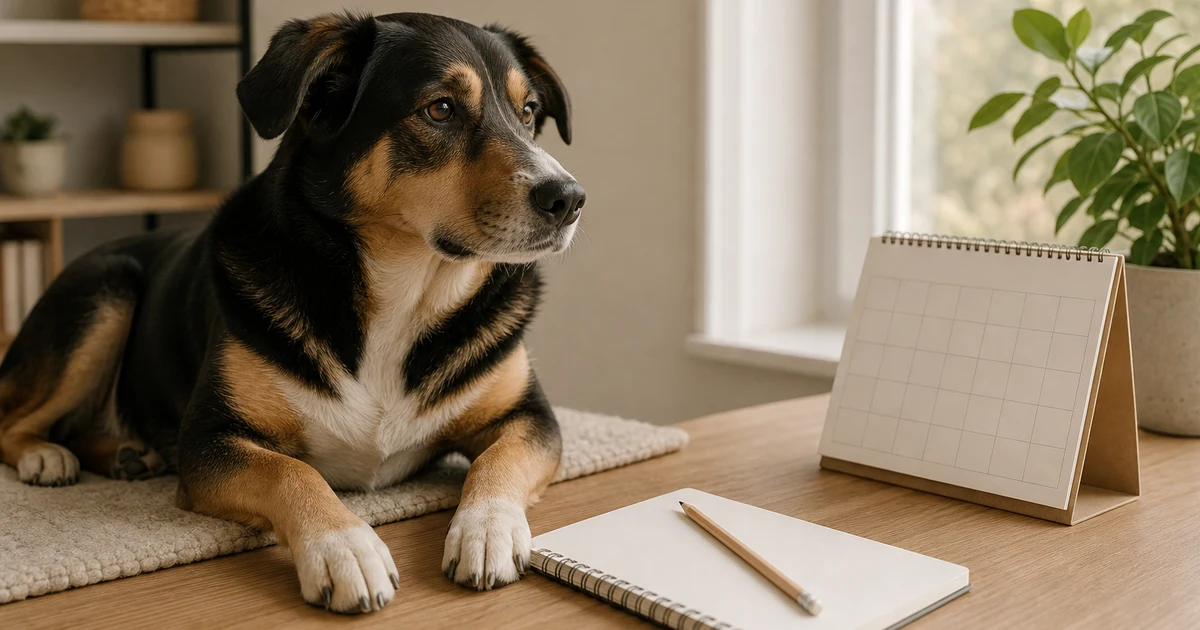
Copy this routine and observation tracker
Use one paper page or phone note each day. This is an organizational aid, not a behavior test or medical assessment. Compare observations with your dog's usual pattern, and record what happened rather than assigning a label such as anxious or stubborn.
- Date and main household changes: ______
- Meals: usual time ______ / actual time ______ / amount eaten compared with normal ______
- Water: available and refreshed ______ / drinking noticeably different ______
- Walks and toilet breaks: planned ______ / completed ______ / changes noticed ______
- Rest: usual bedtime ______ / where and when they rested today ______
- Specific observation: what happened, where, how long and what followed ______
- Safety check: doors, gates and walking equipment checked by ______
- Tomorrow: routine to keep ______ / one change to try ______ / question for the vet ______
Decide whether to continue, simplify or ask for help
Continue the same setup when your dog can eat, rest and take toilet breaks in a pattern approaching their usual one. Simplify optional activity if particular introductions repeatedly interrupt rest. Contact your veterinarian if your dog is struggling, changes are worsening, or eating, drinking, toileting or sleep is noticeably disrupted; do not wait for the first week to end. Your notes can support that conversation, but they cannot establish that moving caused the change.
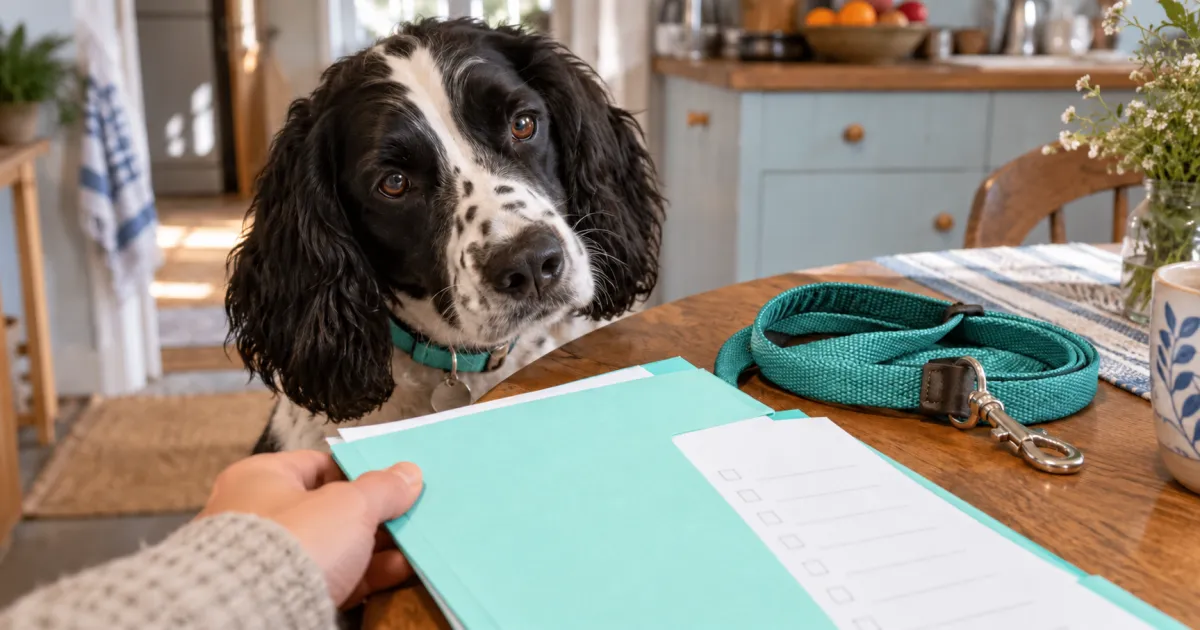
Prepare for your dog's vet appointmentUse your daily observations to prepare a focused account of what changed and whenYour routine and observation sheet
Use this sheet with the instructions in the article. Fill in what you know and leave a question where information is missing.
This page does not send your notes to our server or save them. Refreshing or leaving can lose your notes. Save a PDF or print a copy before you close it.
This sheet organizes information, not medical decisions. If your dog is unwell or you are worried, contact a veterinarian rather than completing the sheet.