How to prepare for a vet appointment for your dog.
A useful veterinary appointment starts before you enter the exam room. Write down what changed, gather the records that give it context, and decide which questions you need answered. This guide is for routine and non-emergency visits; it helps you give the veterinary team a clear history without trying to diagnose your dog yourself.
First, check whether a routine appointment is appropriate
Build a one-page observation log
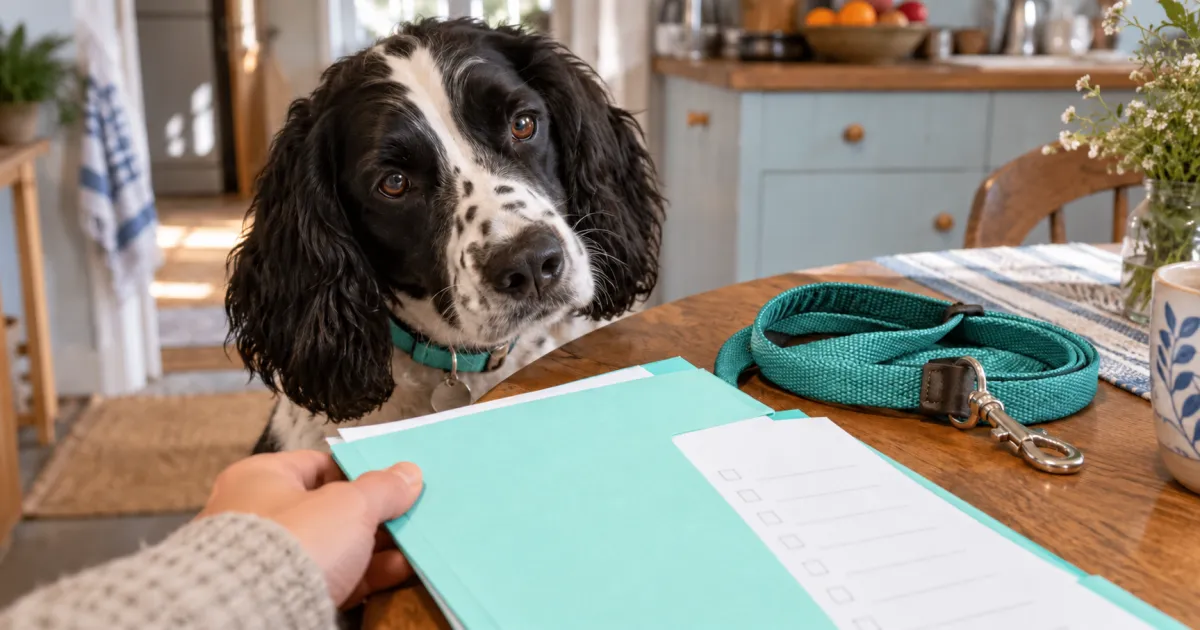
Record observations, not conclusions. Start with the date and time you first noticed the change, then note how often it happens, how long it lasts, and what happens just before or after. A short photo or video may show a limp, cough, episode, or behavior that does not appear in the clinic, but record it only when doing so is safe and does not provoke the behavior.
- What changed, and the exact date or time it began
- Frequency, duration, and any clear trigger or pattern
- Appetite, drinking, urination, stool, sleep, energy, and mobility
- Photos or short videos taken without delaying care or creating risk
- What you tried already and what changed afterward
- The three questions you most need answered
Gather records and medication details
Ask a previous clinic to send the relevant medical record before the appointment, especially for a first visit, referral, or ongoing condition. Bring a current list of every prescription medicine, over-the-counter product, and supplement. Include the exact product name, strength, amount, schedule, last dose, known allergy, and any previous unwanted reaction; a photo of each label can prevent transcription mistakes.
- Vaccination history, recent lab results, imaging, and discharge notes
- Medication and supplement list with doses and timing
- Usual food, treats, appetite, and any recent diet change
- Recent travel, boarding, new animals, or unusual activities
- Insurance or payment details you may need at checkout
- Your observation log and question list
Ask the clinic about food, medication, and arrival
Do not guess whether your dog should fast or skip a usual medicine. Instructions vary with age, health conditions, planned tests, and possible sedation. Call the clinic in advance and follow its directions for food, water, regular medication, samples, arrival time, and anything else you should bring.
Tell the clinic if your dog has been frightened, frozen, tried to escape, growled, or struggled during previous visits. Ask whether you can wait outside or enter through a quieter route, and bring suitable high-value treats if the team agrees. Give pre-visit medication only when a veterinarian has prescribed it for this dog and provided the timing and dose.
Take six questions into the room
- What are you most concerned about, and what else are you considering?
- Which test or observation would change the plan?
- What should I monitor at home, and how should I record it?
- If you prescribe medicine, why is it used, how do I give it, and what effects should I watch for?
- Which change means I should call sooner or seek emergency care?
- When should we recheck, and how will results reach me?
Leave with the next steps written down
Before you leave, repeat the plan in your own words and correct anything you misunderstood. Write down medication instructions, home monitoring, the expected result timeline, who to contact, and the recheck date. Add each time-sensitive step to a reminder while the details are fresh, then store new reports or photos with the same record.
Vet visit worksheet
Fill this in before a planned visit. Print a copy or save it as a PDF for the appointment.
This page does not send your notes to our server or save them. Refreshing or leaving can lose your notes. Save a PDF or print a copy before you close it.
Date, time and clinic contact
Note when it started, how often it happens and what changed. Describe what you saw without guessing a diagnosis.
Copy names, strength and label instructions. Include the last dose if you know it. Ask the vet about any uncertainty.
Note document dates and the clinic or lab that issued them. Check with the clinic how to send copies.
Complete during the visit: next steps, who to contact and when to return
For planned visits only. If you think your dog needs urgent care, contact a vet instead of filling in this sheet.
Sources
- Pet emergency warning signs — AAHA
- Maximize Your Vet Visit — UC Davis School of Veterinary Medicine
- Veterinary Medication Errors — FDA
- How to make veterinary visits less stressful for dogs — Cornell University College of Veterinary Medicine
- Sports Medicine and Rehabilitation Service appointment guidance — UC Davis School of Veterinary Medicine
- Medications for Your Pet: Questions for Your Vet — FDA