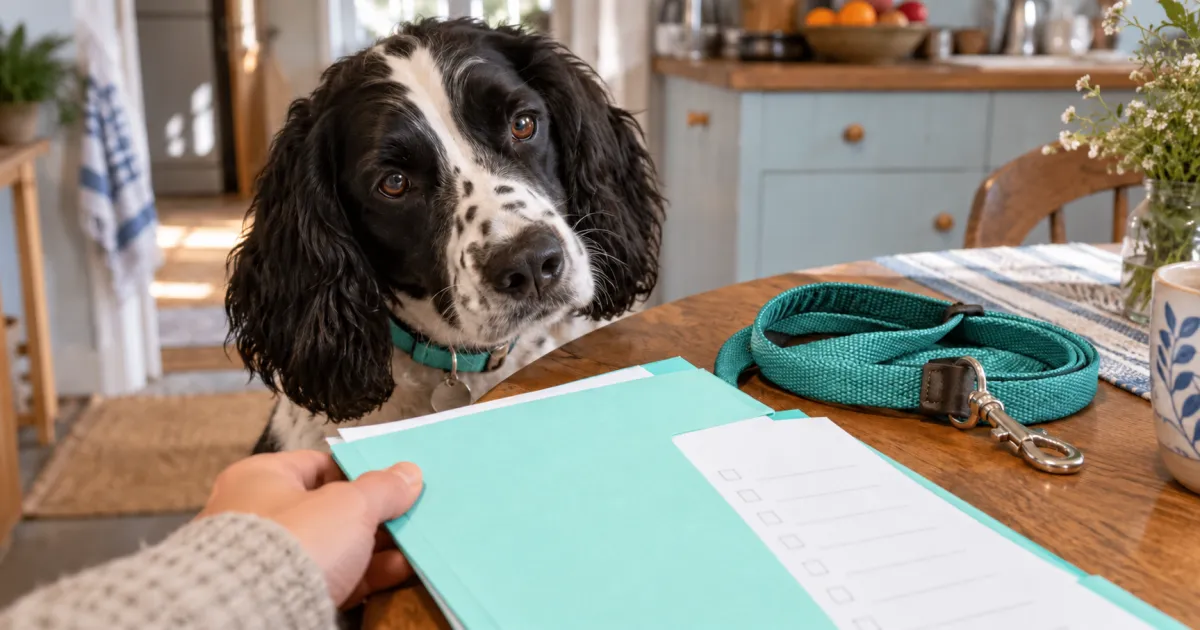
How to write dog sitter instructions that are easy to use.
Write your dog’s handover around three questions: What happens next? What is normal for this dog? Who should the sitter contact if something changes? Use the fill-in sheet below, then test it together before you leave.
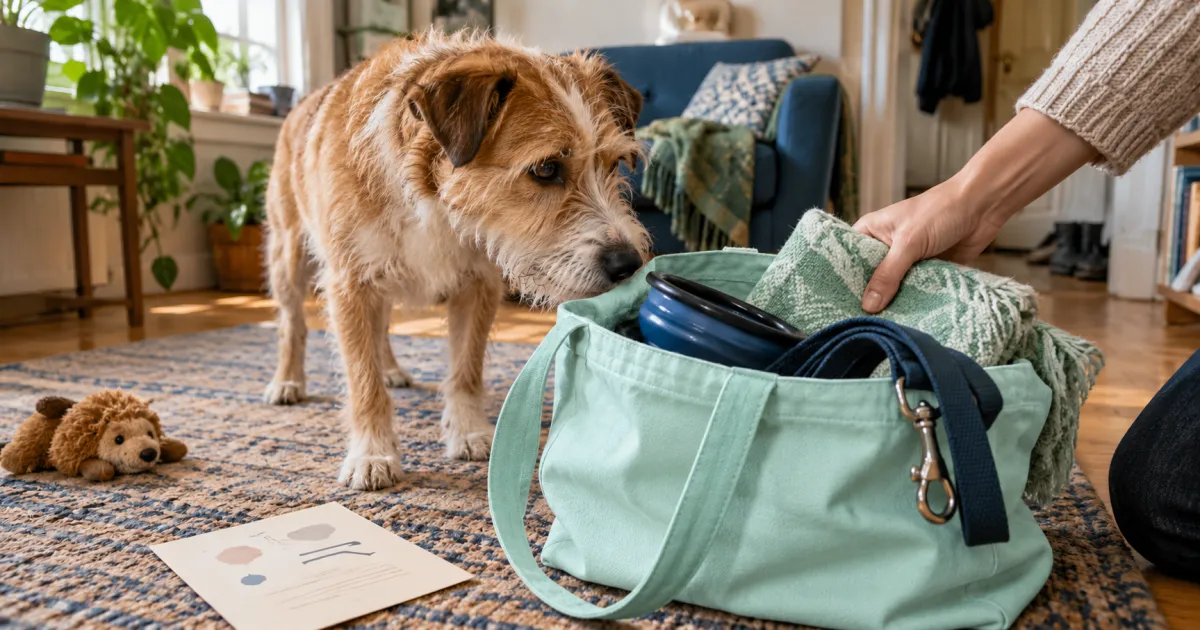
Put actions before background
AAHA recommends covering your dog’s profile, daily routine, supply locations, and emergency contacts. Arrange those details in the order your sitter will use them: contacts first, the daily schedule next, then care and household instructions. Keep supporting records behind the main sheet rather than mixing them into the routine.
Copy this dog sitter instructions checklist
Copy the following fields into a document or notebook. Replace every bracket with an answer, or write “not applicable.” Date the sheet and give the sitter a saved or printed copy. Keep entry codes in a separate private message rather than on a sheet that might travel to a clinic.
Dog, dates, and contacts
- Dog: [name, age, identifying description, current photo location]
- Care period: [first visit or arrival] to [last visit or departure]; updated [date]
- You: [name, phone, time zone, expected periods without reception]
- Local backup: [name, phone, agreed availability and responsibilities]
- Regular veterinarian: [practice, phone, address, opening hours]
- Emergency hospital: [name, phone, address, hours checked on date]
- Records: [location of health summary, vaccination record, microchip details, and insurance information if applicable]
- Routine updates: [preferred method, time, and information to include]
Normal routine and agreed boundaries
- Meals: [time, exact food, usual portion with units, measuring tool, preparation, and feeding location]
- Water: [bowl locations and checking/refilling routine]
- Treats: [approved items and limits]; foods to avoid: [list]
- Bathroom breaks: [usual times, location, and signals your dog uses]
- Walks: [times, usual duration, familiar route, equipment, and agreed restrictions]
- Rest and bedtime: [usual sleeping place and settling routine]
- Time alone: [agreed limit, familiar setup, and backup if a visit is delayed]
- Normal observations: [usual appetite, drinking pattern, stool, energy, and mobility]
- Behavior and handling: [triggers, escape risks, bite history if any, handling limits, and familiar cues]
- Boundaries: [rules for greetings, other dogs, visitors, off-leash activity, and off-limits rooms]
Approved care and prescription instructions
Keep your routine notes separate from the veterinarian’s instructions. Supply the current prescription label and written directions, and resolve any mismatch with the clinic before departure. FDA advises asking about administration, storage, side effects, and what to do after a missed or vomited medicine. Those answers depend on the medicine; the sitter should not improvise.
- Known conditions and allergies: [owner-confirmed information]
- Current care restrictions: [attach veterinarian’s written instructions, if any]
- Prescription instructions: [location of current label and veterinary directions for each medicine]
- Scheduled care during this stay: [times from the current written instructions]
- Medicine and supplies: [storage location and required equipment]
- Demonstration: [task shown to sitter, date, and any unresolved questions]
- Exceptions: [location of veterinarian’s instructions for missed, refused, spat-out, or vomited medicine; clinic number for questions]
- Completion log: [date, scheduled task, actual completion time, caregiver initials, and any problem]
Access, supplies, and transport
Show the sitter where supplies are stored and test the backup way into your home. AKC recommends providing access instructions and a spare key even when you use a keypad. If transport may be needed, show the sitter your dog’s secured carrier or vehicle restraint setup; ASPCA advises securing pets during car travel.
- Entry: [door to use, key handover, and where private alarm instructions were sent]
- Backup access: [key holder and phone]; entry tested: [date]
- Door and gate routine: [what to close or latch before moving your dog]
- Supplies: [food, measuring tool, bowls, leash, harness, waste bags, and cleaning supplies]
- Home arrangements: [permitted visitors, expected workers, cameras, and relevant house rules]
- Transport: [available driver, vehicle, restraint equipment location, and backup driver]
- If the sitter cannot continue: [confirmed replacement caregiver and contact details]
- If the home becomes unsafe: [agreed safe destination and local contact]
Confirm what happens when something changes
Review the plan below with your sitter and local backup. For an existing condition, ask your veterinarian which changes need a call and attach their written guidance. Before leaving, ask the clinic what consent and payment arrangements it needs when someone else brings your dog; record the confirmed arrangement rather than assuming this sheet authorizes treatment.
- Routine question, dog otherwise as usual: use the sheet, then contact you or the agreed backup for missing details. Example: the usual walking route is closed.
- New health concern or uncertainty: call the regular veterinarian for guidance, or the emergency hospital if the practice is unavailable. Notify you too, but do not make your reply a condition for seeking veterinary advice.
- Emergency signs: difficulty breathing, collapse, unresponsiveness, major trauma, or heavy bleeding mean proceeding to the nearest emergency veterinary hospital without waiting for your reply. Call ahead when possible. These are examples, not a complete list.
- Possible poisoning or wrong medicine: call a veterinarian, emergency hospital, or animal poison service without waiting for symptoms. In the US, ASPCA Animal Poison Control is 888-426-4435; a consultation fee may apply. Follow professional instructions rather than home remedies.
- Dog-specific veterinary guidance: [document location and clinic contact]
- If you cannot be reached: [backup person and agreed role]
- Consent and payment arrangements: [what the clinic confirmed, with whom, and when]
- Owner confirmation: [name and date]; sitter review: [name and date]; backup agreement: [date]
- Observation note: [time, what happened, how often, what differs from normal, and who was contacted]
Test the sheet before you leave
- Ask the sitter to find the next meal instructions and the correct measuring tool using only the sheet.
- Walk through entry, gates, and the familiar walking equipment together. Add any step that still needs a spoken explanation.
- Ask where they would find the current prescription directions and record a completed task, if relevant.
- Rehearse two questions: “You cannot reach me and have a health concern. Who do you call?” and “The keypad fails. How do you get in?”
- Replace vague wording such as “a scoop,” “later,” or “call if needed” with a measure, time, contact, or agreed next action.
At departure, record the last completed meal, bathroom break, and scheduled care task, with times. On return, review the same log together before taking over. Keep one dated version of the instructions, and tell the sitter directly if anything changes.
Your dog sitter handover sheet
Use this sheet with the instructions in the article. Fill in what you know and leave a question where information is missing.
This page does not send your notes to our server or save them. Refreshing or leaving can lose your notes. Save a PDF or print a copy before you close it.
This sheet organizes information, not medical decisions. If your dog is unwell or you are worried, contact a veterinarian rather than completing the sheet.
Sources
- AAHA: Preparing for the Unexpected: Essential Pet Sitter Instructions
- FDA: Medications for Your Pet ... Questions for Your Vet
- American Kennel Club: How to Prep Your House for a Pet Sitter
- ASPCA: Travel Safety Tips
- Cornell University College of Veterinary Medicine: Emergency and Critical Care
- Cornell University College of Veterinary Medicine: Recognizing and responding to canine respiratory distress
- FDA: Who Do You Call if You Have a Pet Emergency?