What to pack for a road trip with your dog.
Pack one bag for roadside stops, one for the overnight stay, and a document folder you can open without a signal. Fit the travel restraint before loading luggage. This checklist helps you find what your dog needs at the next stop, then hand over care without guessing who fed or walked them.
Before you load the car
Try the travel setup on short drives before a long trip. Secure a suitable crate or use a car harness in the back seat according to its instructions; check that luggage cannot shift into your dog’s space. ASPCA’s car-travel guidance supports securing your dog and the carrier. A packed bag cannot make an unsuitable travel setup safe.
Confirm that each overnight stop accepts your dog and ask about restrictions, fees, arrival arrangements, and places for toilet breaks. Save the answers with the booking. If your dog struggles with car travel or you are unsure they are fit for the trip, speak with your veterinarian before leaving. Plan regular breaks around your dog’s needs rather than a fixed driving target.
Keep the stop bag within reach
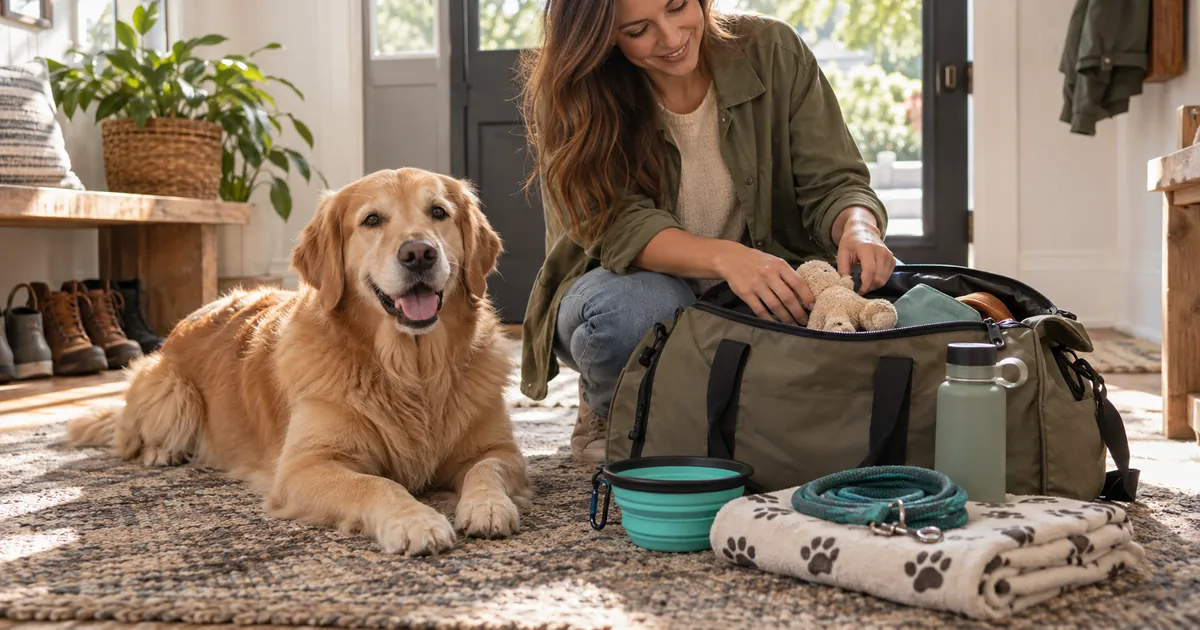
- Drinking water and a bowl, with a refill plan for the route
- Leash, well-fitting walking harness or collar, and identification with a reachable phone number
- Waste bags, a towel, and supplies to clean up accidents
- Your dog’s usual food for stops when a meal is due, plus their usual measuring scoop
- A familiar small blanket or toy, if suitable for your dog’s travel setup
Keep this bag accessible when parked, but secure it so it cannot slide around. Rehearse the first stop before departure: park, retrieve the leash, secure your dog before opening their exit, and take the bowl out without unloading suitcases. Pack a spare leash where you can find it if the first one goes missing.
Pack the overnight supplies separately
- Usual food for the stay and return trip, with extra for a possible delay
- Food bowl, bedding, and a familiar item for the sleeping area
- Any prescribed supplies your dog already needs, with their written veterinary instructions
- Grooming and cleaning supplies you normally use, plus a separate bag for wet items
Write the food quantity you packed and the number of days it covers on the bag. For example, a three-night trip may include meals before check-in and after check-out; count the actual meals, not hotel nights. Confirm storage needs for prescribed supplies with your veterinary practice before packing. Keep the familiar routine where practical, as RSPCA’s holiday guidance recommends.
Make an offline records folder
- Dog’s name, a recent photo, microchip number if applicable, and your current contact details
- Vaccination and relevant health records, plus the current written care instructions
- Documents confirmed as necessary for your exact route and accommodation
- Your regular veterinary practice and an emergency clinic near each overnight stop
For travel between US states, USDA APHIS directs you to the receiving state’s animal-health requirements. Check them before booking veterinary paperwork; a health certificate is not a universal road-trip rule. For routes elsewhere or across a national border, check the relevant official destination and transit requirements. A phone copy is useful for reference, but confirm whether any required document must be an original.
Download the files and test that they open in airplane mode. Keep a paper copy of essential contacts and any required originals in a dry folder. Save clinic addresses and out-of-hours details as well as phone numbers; confirm the service before departure. Give another adult traveling with you access to the same information.
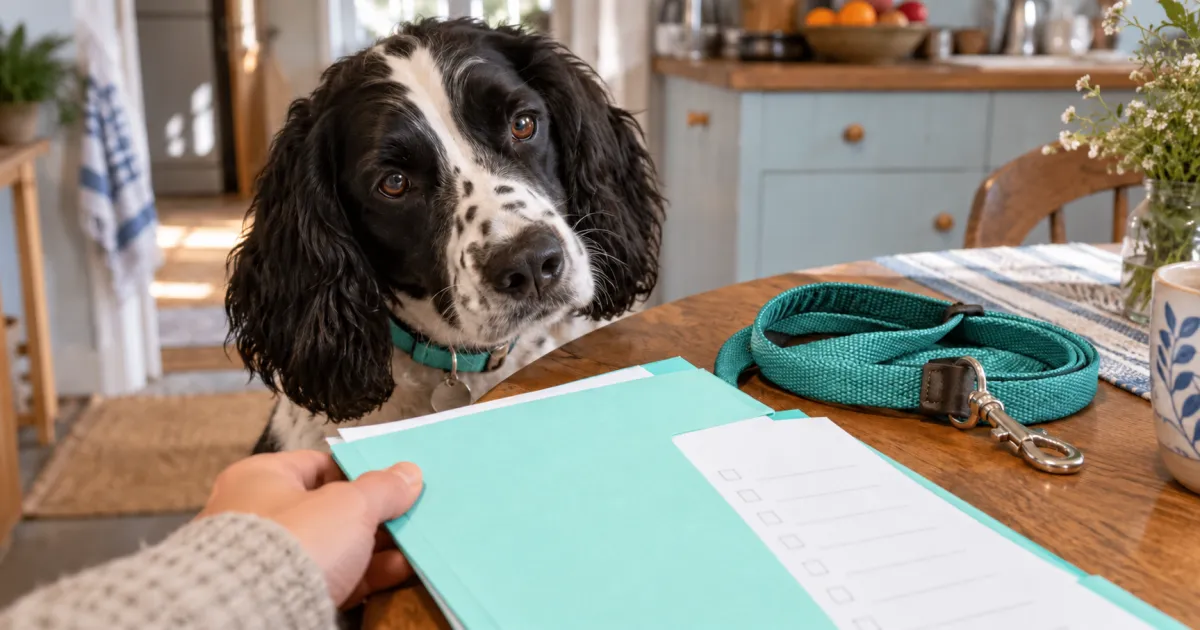
Copy this stop and handover card
- Next planned stop and backup stop: ___ / ___
- Person responsible for the dog at this stop: ___
- Last meal: time ___ / amount ___
- Last toilet break and water offered: ___
- Next routine care task: ___ / responsible person ___
- Stop bag location: ___ / overnight bag location: ___
- Records location and veterinary contact: ___
Update the card when you change drivers or someone takes over care. Use times and amounts rather than “already done.” Keep any veterinary instructions with the records; the card only points to them. Before closing the car, ask the next caregiver to locate the leash and read back the next task. That small rehearsal can reveal a bag buried under luggage or an instruction nobody received.
Check the plan at each stop
Offer water and a chance for a leashed toilet break. Adjust the route if your dog is not coping with the drive. Keep the vehicle cool and ventilated, and never leave your dog alone in a parked car, as ASPCA advises. Plan human food and bathroom stops so someone stays with the dog, or choose a place where you can take them with you.
If your dog becomes unwell, stop safely and contact a veterinarian for advice about continuing. On arrival, find the permitted toilet area and set out water and bedding before unpacking the rest. Refill the stop bag that evening so the next morning starts with supplies ready.
Your road trip checklist
Use this sheet with the instructions in the article. Fill in what you know and leave a question where information is missing.
This page does not send your notes to our server or save them. Refreshing or leaving can lose your notes. Save a PDF or print a copy before you close it.
This sheet organizes information, not medical decisions. If your dog is unwell or you are worried, contact a veterinarian rather than completing the sheet.