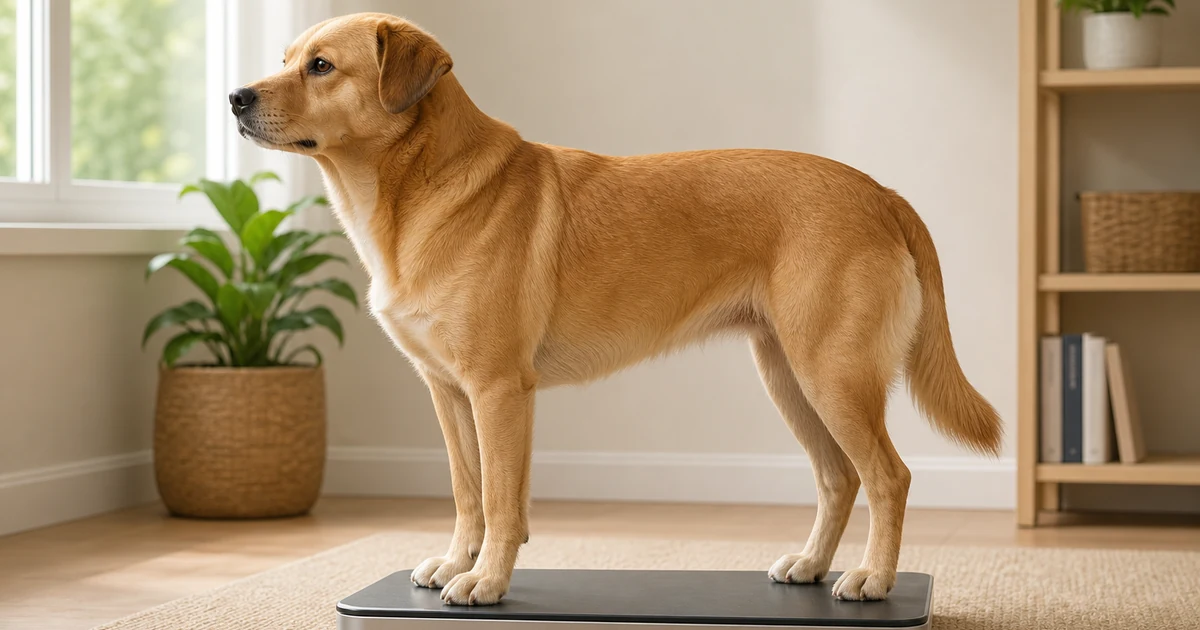
How to check your dog for ticks after every walk.
Ticks are easy to miss. Prevention recommended by your vet and a careful check after walks through grass, brush, or woods work together. This guide shows where to look, how to remove a tick, and what to record afterward.
Why prevention and checks work together
Tick preventatives — collars, spot-ons, oral tablets — cut the risk significantly, but none of them guarantee zero ticks. A tick can still land on your dog, and depending on the product, it may need to bite before it's affected. The physical check is your backup layer.
Remove an attached tick as soon as you find it. The time needed to transmit infection differs by tick and pathogen, so there is no universal safe window after a bite. Prompt removal lowers risk; it does not guarantee that transmission did not occur.
What you're actually feeling for
Adult ticks are visible — roughly the size of a sesame seed before feeding, and up to a grape when engorged. Nymphs (juvenile ticks) are much smaller, about the size of a poppy seed, and easy to miss if you're moving quickly.
Use good light and part the fur until you can see the skin. Look for a small attached body and legs, but remember that not every bump is a tick. Do not rely on whether a bump moves under your finger; if you cannot identify it confidently, ask your vet.
Run your fingers slowly through the coat with enough pressure to feel the skin underneath. Don't skim the surface. On a thick double coat like a golden retriever or a husky, work in sections.
Where to look, in order
Use the same route each time so nothing gets skipped. Public-health guidance highlights the ears and eyelids, under the collar and front legs, between the toes and back legs, and around the tail.
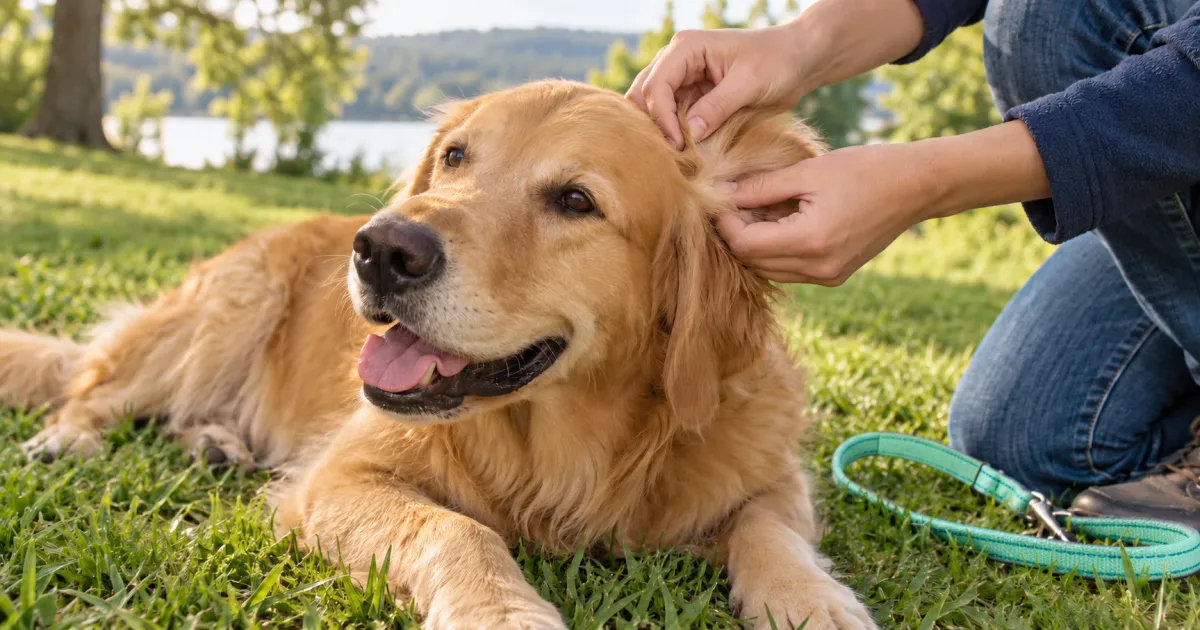
Start with the head. Check around the eyelids, inside each ear flap, around the ear canal opening, and along the base of the ear. Do not put a tool into the ear canal. Then remove or loosen the collar and inspect the neck beneath it.
Move to the armpits and groin. Part the fur until you can see the skin, then check between every toe and around the paw pads and nails.
Finish around the back legs and tail, then check the belly and under the chin. Ticks are harder to see in long or dark coats, so combine a visual check with slow fingertip pressure and work in small sections.
How to remove a tick safely
Use fine-tipped tweezers, grasp the tick as close to the skin as you can, and pull upward with steady, even pressure. Do not twist or jerk, and do not crush the tick's body. If you use a tick-removal tool, follow its instructions.
After removal, clean the bite site with rubbing alcohol or soap and water. Dispose of the tick by putting it in alcohol, sealing it in a bag, or flushing it. Don't crush it with your fingers.
Do not coat the tick with petroleum jelly or nail polish, and do not use heat. These methods delay removal. Use tweezers or a purpose-made tool, then clean your hands and the bite area.
Keeping a record of what you find
If you find and remove a tick, write down the date, where on the dog's body it was, and whether it appeared engorged. This matters because if your dog develops symptoms in the following weeks, your vet will want to know when the tick was found and how long it may have been attached.
Puffy's care log lets you add a note like this in a few seconds after a walk. It sits alongside your dog's vaccination records and vet visits, so if you're ever in an appointment trying to remember when that tick was, the date is already there.
When to call your vet
Watch your dog closely after finding a tick. Call your vet if their behaviour or appetite changes, or if they become unusually tired, feverish, sore, stiff, or otherwise unwell. Signs vary by disease and region and may appear days or weeks later, so do not wait for a particular rash.
Call your vet if you cannot remove the tick, or if the area becomes increasingly red, swollen, or painful. Do not dig aggressively for small mouthparts left in the skin. Your vet can advise on tick identification, testing, or treatment based on your location, your dog's prevention plan, and any signs of illness.
If you're unsure whether what you're seeing is a tick bite reaction or something else, that's a question for your vet, not a search engine. The symptoms of tick-borne illness overlap with a lot of other conditions, and sorting them out requires a proper exam.
Making the check a habit
Check your dog daily during tick season, especially after time outdoors. Ticks may be present in parks, garden edges, yards, and wooded areas depending on your region. Your veterinarian can advise when local risk is highest and which preventive product fits your dog.
Tying the check to something you already do helps. Some owners do it at the door before they take the leash off. Others do it while their dog gets a post-walk drink. The sequence doesn't matter. Consistency does.
How Puffy helps
If you find a tick, log the date, the place on your dog's body, a clear photo if possible, and whether it looked engorged. Keeping that note beside vaccination records and vet visits gives your vet a more useful timeline if your dog becomes unwell later.
Puffy can keep that observation with the rest of your dog's care history. It cannot identify a tick or decide how urgent a symptom is. If your dog seems unwell or you are worried, contact your veterinarian or a local emergency clinic.
If this kind of care record would be useful, the App Store button below opens Puffy directly.
Your tick observation note
Use this sheet with the instructions in the article. Fill in what you know and leave a question where information is missing.
This page does not send your notes to our server or save them. Refreshing or leaving can lose your notes. Save a PDF or print a copy before you close it.
This sheet organizes information, not medical decisions. If your dog is unwell or you are worried, contact a veterinarian rather than completing the sheet.