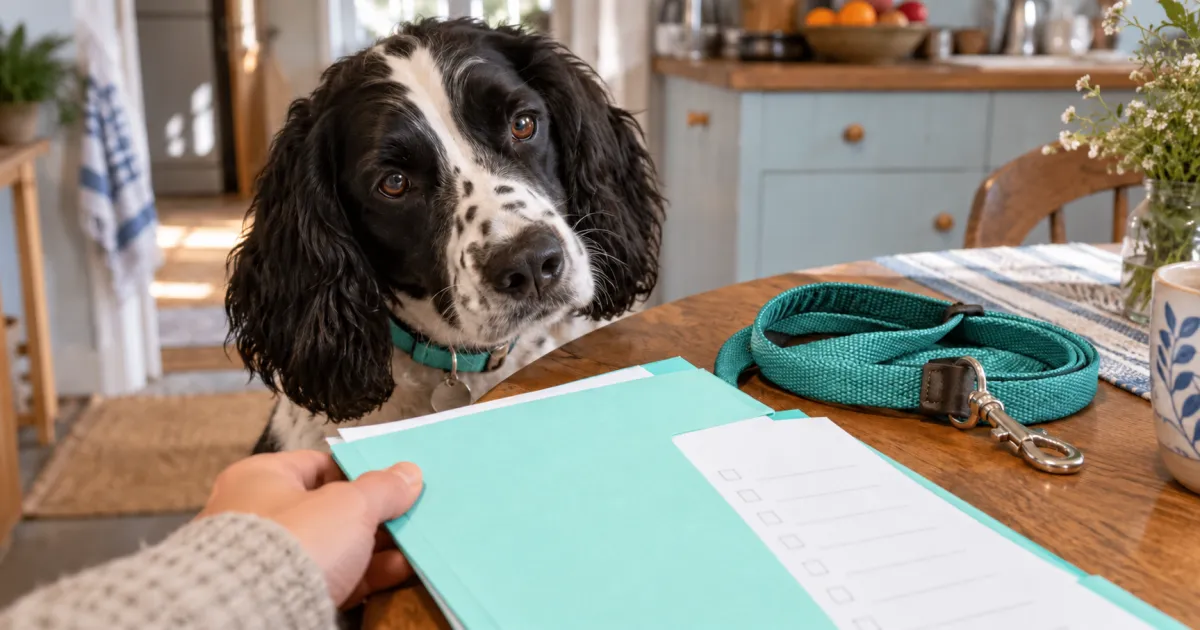
Planning the first week with a newly adopted adult dog.
Plan your first week with an adopted dog around a few repeatable tasks: meals, bathroom breaks, rest, and getting to know each other. Start with the shelter's information, then adjust your plan to what you observe at home.
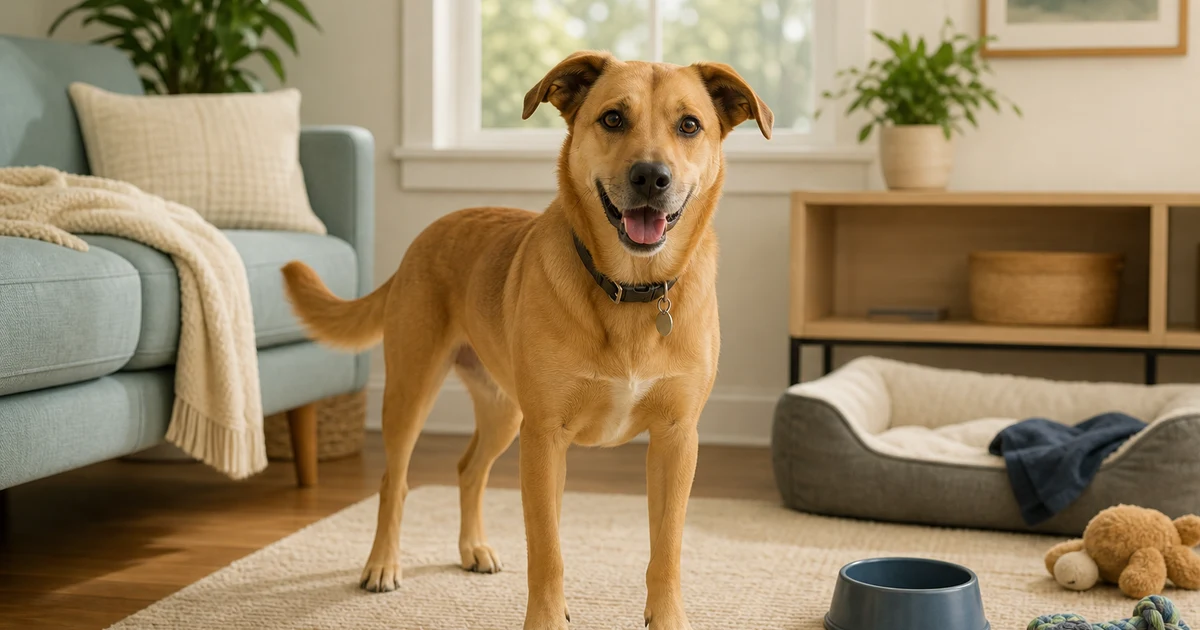
This is an adult adoption plan, not a puppy schedule or a house move with a dog you already know. An adult dog brings previous experiences, but you may not know which routines or skills will carry over. Treat missing information as a question for the adoption team, not a gap to fill with assumptions.
Before pickup: turn the handover into a plan
Make one shared note with three headings: what the shelter knows, what you will do at home, and what still needs checking. Ask whether each observation comes from kennel life, a previous home, or another setting. Keep that context beside the answer.
- Food → Ask for the exact food, portion, meal times, and any prescribed diet. Write down your starting feeding plan.
- Health → Request examination notes, vaccination and parasite-treatment records, current medication instructions, and any surgery restrictions. Confirm the next dose and follow-up dates rather than guessing.
- Bathroom habits → Ask about the dog's schedule, preferred surface, and observed accidents. Choose an accessible outdoor spot.
- Rest and separation → Ask where the dog slept and what happened when left alone or confined. Arrange company during unavoidable absences while you learn what they can manage.
- Handling and safety → Ask about fears, escape attempts, guarding, bite history, and interactions with children or other animals. Request a specific management plan for any known concern.
- Identification and support → Confirm the microchip-transfer process, add your contact details to an ID tag, and save the adoption team's contact information and support hours.
Prepare a small, safe starting space
- Set out a bed, clean water, and separate food and water bowls in a low-traffic area. Keep the rest spot available without forcing contact.
- Put medications, cleaners, trash, electrical cords, and swallowable objects out of reach. Check doors, gates, and fencing before arrival.
- Have a fitted collar or harness, a fixed-length leash, waste bags, and cleaning supplies ready. Ask the shelter to check the fit and demonstrate safe handling.
- Agree who handles meals, bathroom trips, medication, and the final evening outing. Keep one shared record so care is not missed or duplicated.
- If children or other animals live with you, arrange separate spaces and ask the adoption team for an introduction plan. Supervise children with the dog and keep them away during eating and rest.
A crate is an option, not proof that a dog can tolerate confinement. Ask about their experience before using one, and do not force them inside. With resident dogs, feed separately and use barriers when you cannot supervise.
Arrival day: keep the agenda short
Arrange secure transport with the adoption team before pickup. At home, offer a leashed bathroom break, then show your dog their water and resting area. Let them approach household members instead of passing them around for greetings. Save visitors, pet-store outings, and dog parks for later.
For the first night, choose somewhere you can hear your dog and respond to a bathroom need or distress. The RSPCA suggests sleeping nearby during the initial adjustment if needed. Keep nighttime outings simple, then return to the resting area.
Days 1–3: repeat a workable daily rhythm
Use the sequence below as a planning template, not a fixed exercise or feeding prescription. Continue the familiar food unless the veterinarian advises otherwise. Match activity to your dog's health, comfort, and any discharge restrictions rather than trying to tire them out.
- Morning: offer a bathroom trip on waking, follow the agreed meal and medication schedule, then allow time to rest.
- Daytime: provide bathroom opportunities after meals and naps, plus additional breaks according to need. Include manageable leashed sniffing outings and quiet time.
- Interaction: offer brief, reward-based practice with something simple, such as responding to their name. Let the dog disengage rather than turning every encounter into training.
- Evening: follow the agreed feeding schedule, lower household activity, and offer a final bathroom trip before bed.
- Daily check: note food eaten, drinking, urine and stool, rest, and one situation that seemed easy or difficult. Keep fresh water available throughout.
Do not assume an adult dog already understands your bathroom routine. Go outside with them, reward outdoor toileting, and clean indoor accidents without punishment. Begin alone-time practice gradually, with separations short enough to remain comfortable; do not make the first test a full workday. If the dog becomes distressed, reduce the difficulty and ask for help.
Days 4–7: choose keep, simplify, or ask
The familiar 3-3-3 rule is a general adoption shorthand, not a scientifically established timetable for an individual dog. Do not add challenges simply because day four has arrived. Use this review framework instead; it organizes decisions but does not diagnose behavior or illness.
- Keep: identify something that is working, such as a bathroom route or resting spot, and repeat it. You do not need to add a new experience every day.
- Simplify: if an outing or interaction appears difficult, make the next attempt shorter, quieter, or more distant. For example, replace a busy route with a quieter one rather than adding another visitor.
- Ask: send the adoption team a concrete observation and question. For example: paced and barked when I stepped behind the gate; settled after I returned. What separation setup did you use?
- Protect safety: if you see growling, snapping, guarding, or conflict, create distance and use secure separation. Do not test the behavior or punish the warning. Contact the adoption team and veterinarian for a suitable support plan.
Know which questions belong with the veterinarian
During the first week, contact your chosen veterinary clinic to arrange the initial examination at an appropriate time and share the shelter's records. Ask about unresolved health concerns, medication, vaccination status, and safe contact with other dogs. Contact the clinic sooner for poor appetite, coughing, vomiting, diarrhea, pain, or unusual lethargy rather than assuming these are adjustment alone.
At the end of the week, keep a short summary: the routine you followed, what you observed, and the questions still unanswered. That is a useful handover for your veterinarian and adoption team, whether your dog is exploring confidently or still needs a smaller, quieter routine.
Your first-week notes
Use this sheet with the instructions in the article. Fill in what you know and leave a question where information is missing.
This page does not send your notes to our server or save them. Refreshing or leaving can lose your notes. Save a PDF or print a copy before you close it.
This sheet organizes information, not medical decisions. If your dog is unwell or you are worried, contact a veterinarian rather than completing the sheet.
Sources
- RSPCA: Getting ready for your rescue dog
- ASPCA: General Dog Care
- Humane Society of Charlotte: Adding a New Dog to Your Household
- Ontario SPCA: Tips for your first week home with your newly adopted pet
- Heritage Humane Society: First Week at Home
- Cornell University College of Veterinary Medicine: Emergency and Critical Care
- Cornell University College of Veterinary Medicine: Canine respiratory disease outbreaks